Catalytic Liquefier is an advanced emission reduction technology that helps reduce CO, CO₂, NOx, SO₂, and HC emissions from petrol, diesel, CNG engines, and industrial exhaust systems. By converting harmful gases into heat, water vapor, and specific liquid forms, it there innovative solution optimizes combustion processes, improves air quality, and supports a cleaner, more sustainable environment.
Catalytic Liquefier Pvt. Ltd. is an advanced emission reduction technology company that reduces harmful emission gases through chemical reactions. The technology converts these harmful gases into heat, water vapor, and specific non-toxic liquids, helping create a cleaner and more sustainable environment.
Catalytic Liquefier is an advanced emission reduction technology that minimizes harmful pollutants from petrol, diesel, CNG engines, and industrial exhaust systems. Using innovative catalytic and chemical reactions, it reduces CO, CO₂, NOₓ, SOₓ, and hydrocarbon (HC) emissions by converting harmful gases into heat, water vapor, and specific non-toxic liquid by-products.
The technology optimizes combustion efficiency, improves air quality, and helps industries comply with environmental regulations. Suitable for automobiles, generators, boilers, and manufacturing plants, its modular design enables easy installation with minimal modifications. Catalytic Liquefier provides a cost-effective, sustainable solution that supports cleaner operations, reduced greenhouse gas emissions, and a healthier environment.
Know More About Us →
Beyond conversion. Liquefaction.
A standard catalytic converter converts CO → CO₂, HC → CO₂ + H₂O and NOx → N₂ — but still releases gases into the atmosphere. The Catalytic Liquefier goes a step further, condensing a portion of the exhaust stream into liquid form for collection and reuse — which is where the name comes from.
In short, it means: convert what can be converted, and liquefy what can be liquefied — leaving as little as possible simply vented to atmosphere.
Two commitments guide every unit we engineer and every plant we work with.
"To lead India's industrial and automotive sectors toward near-zero gaseous emissions, where exhaust from every engine and stack is captured, converted and partially liquefied — protecting public health and enabling sustainable industrial growth."
"To design and deploy affordable, field-proven emission-control technology that helps manufacturers and industries exceed CPCB & MoEF compliance benchmarks, while recovering value from what would otherwise be waste gas."


B.Tech mechanical engineer with a deep passion for environmental engineering.
Witnessing the severe air pollution challenges faced by Indian industrial towns and city traffic, Rohit dedicated years of research to develop a technology that could realistically and affordably solve the emission crisis — not by displacing pollution, but by converting and recovering it.
After years of iterative research, he developed the Catalytic Liquefier — a device that simultaneously addresses multiple categories of pollutants from petrol, diesel and CNG engines and industrial exhaust, while recovering heat and creating recoverable liquid byproducts. The technology received NIDHI PRAYAS support from DST, Government of India, and was independently tested at ARAI and the National Chemical Laboratory.
Mission: to make every Indian tailpipe and industrial chimney a source of clean air — not pollution. Company: Catalytic Liquefier Pvt Ltd · CIN U28299MH2025PTC451516 · Stage: Validation.
A three-stage approach to converting raw exhaust into clean, compliant, and partially recoverable output — replacing traditional catalytic converters and scrubbers.
Exhaust is captured directly from engine tailpipes or industrial stacks via precision intake manifolds, with flow, temperature and composition continuously sensed.
Gases pass through our patented catalyst matrix, where CO, CO₂, NOx, SO₂, HC and CH₄ undergo controlled chemical transformation into neutral compounds.
Exhaust gases are converted into heat, water vapor and specific liquid forms — working toward minimizing or eliminating gaseous emissions from the exhaust stream entirely.
We are not just delivering a device; we are creating a meaningful impact that resonates through public health, regulatory compliance, and industrial competitiveness.
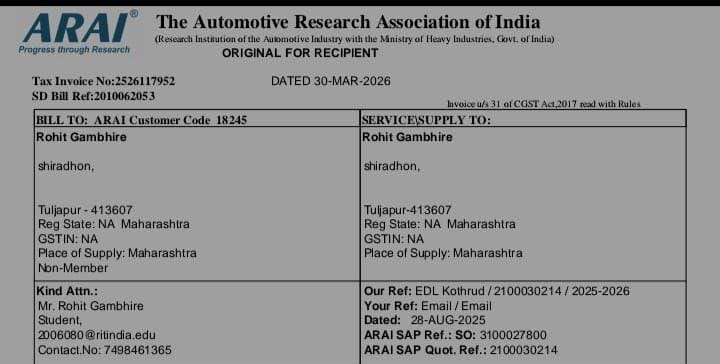
Performance was tested on emission gases at the Automotive Research Association of India (ARAI) and National Chemical Laboratory (NCL). The system demonstrated effective control of CO, CO₂, NOx, HC and CH₄ gases, smoke and particulate matter under different petrol, diesel and industrial operating conditions.

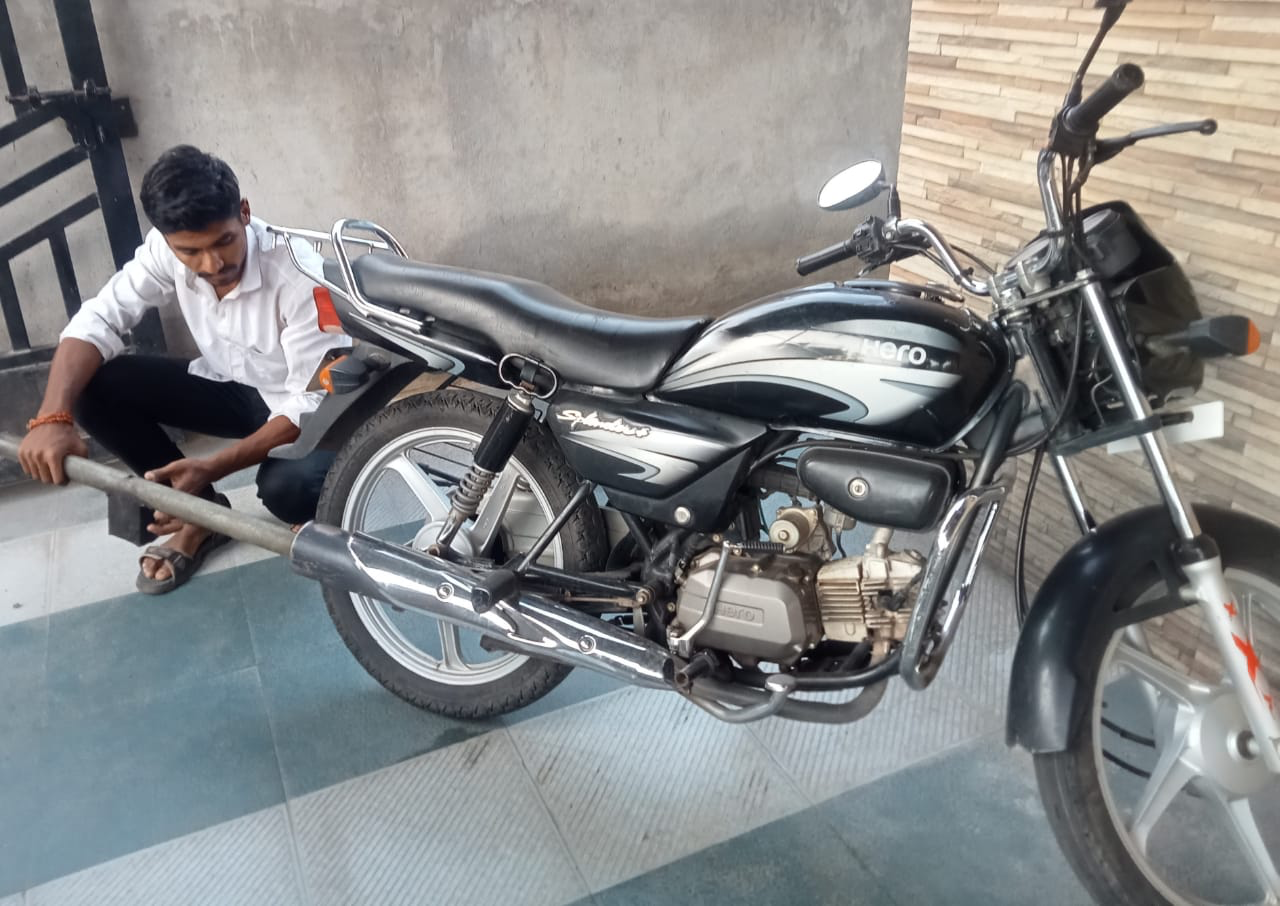
Two-wheeler tailpipe fitment & live drive test

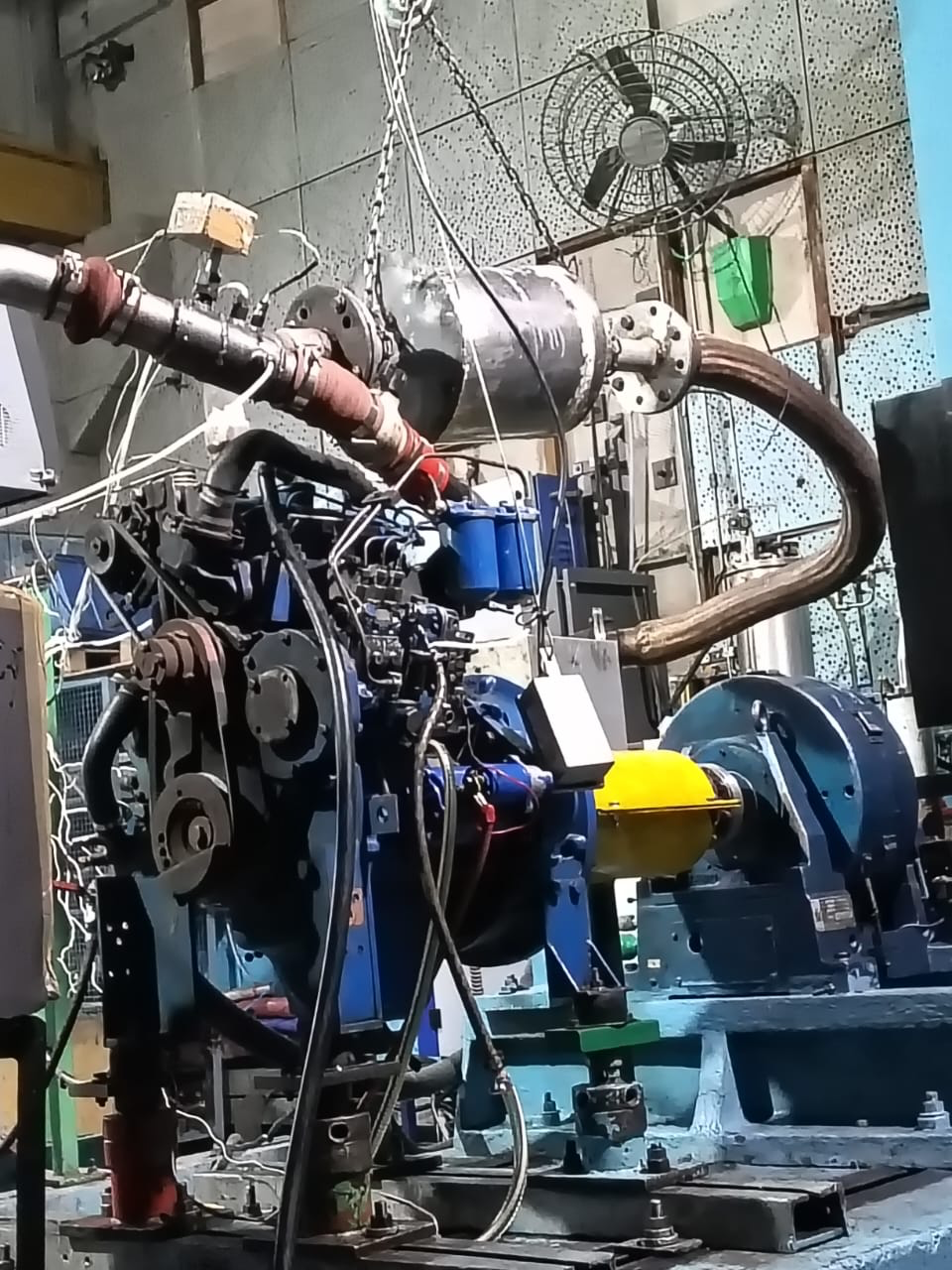
Bench-mounted prototype under load

Live CO, HC, CO₂ & O₂ readout during dyno testing
The catalytic liquefier was used to convert gaseous emissions into liquid form, primarily focusing on SO₂. The process was consistent across all engine types and power levels.
| Gas Type | Input Concentration (g/kWh) | Liquefied Output |
|---|---|---|
| CO₂ | 120 – 210 | 86% |
| NO₂ | 0.10 – 0.40 | 91% |
| HC | 1.0 – 2.0 | 55% |
| SO₂ | 0.15 – 0.40 | 91% |
FTIR (Fourier-Transform Infrared) testing identifies chemical compounds, gas compositions and functional groups in the liquefied output. ARAI testing verifies emission-reduction performance and measures fuel-efficiency improvement — Test Report No. ERL/2025-26/3000047453, dated 25-Sep-2025.
| Pollutant | Emission Limit | Measured |
|---|---|---|
| Carbon monoxide (CO) | 3.0 | 0.68 |
| Hydrocarbon | 3000.0 | 103.0 |
| Lambda | 1 ± 0.03 | 0.0 |
| Light absorption coeff. | 2.45 | 0.1 |
The main legal requirement industrial stacks must meet — typical CPCB norms — and the national AQI breakpoint scale used to classify air quality.
| Parameter | Limit (Typical CPCB Norm) | Remarks |
|---|---|---|
| Particulate Matter (PM) | ≤ 150 mg/Nm³ | Main mandatory limit for sugar mills |
| PM (NCR / strict zones) | ≤ 80 mg/Nm³ | Stricter regional rule |
| PM (Boilers >10 TPH, bagasse) | ≤ 250 mg/Nm³ | Agro-fuel boiler relaxation |
| SO₂ (Sulfur dioxide) | ~ 40 mg/Nm³ | Depends on boiler norms |
| NOx (Nitrogen oxides) | ~ 25 mg/Nm³ | Depends on combustion system |
| CO (Carbon monoxide) | ~ 1% (volume) | Indicates incomplete combustion |
| AQI Category | PM₁₀ 24-hr | PM₂.₅ 24-hr | NO₂ 24-hr | CO 8-hr (mg/m³) | SO₂ 24-hr |
|---|---|---|---|---|---|
| Good (0–50) | 0–50 | 0–30 | 0–40 | 0–1.0 | 0–40 |
| Satisfactory (51–100) | 51–100 | 31–60 | 41–80 | 1.1–2.0 | 41–80 |
| Moderate (101–200) | 101–250 | 61–90 | 81–180 | 2.1–10 | 81–380 |
| Poor (201–300) | 251–350 | 91–120 | 181–280 | 10.1–17 | 381–800 |
| Very Poor (301–400) | 351–430 | 121–250 | 281–400 | 17.1–34 | 801–1600 |
From two-wheelers to sugar mills, the Catalytic Liquefier adapts to any exhaust profile across nine+ critical sectors.
Verified performance numbers behind the Catalytic Liquefier, from lab testing to projected national-scale impact.
"Premium quality you can trust — every batch tested, every reading verified."
Every batch undergoes rigorous testing to ensure it meets the highest emission-reduction standards for your facility or fleet.
We understand your operations depend on schedule. Our engineering team commits to defined installation and commissioning timelines.
Every customer has unique exhaust profiles. We customise the Catalytic Liquefier configuration to your specific engine or stack requirements.
Our patented catalyst matrix and liquefaction stage keep you ahead of tightening CPCB & MoEF benchmarks.
| Feature | PM ControlESP / Bag filter | CO & VOC ControlOxidation catalyst | ⚡ Catalytic LiquefierAdvanced technology |
|---|---|---|---|
| Primary Function | Captures fine ash / dust | Converts CO → CO₂ | Converts & partially liquefies multiple pollutants |
| Pollutant Reduction | PM only | Effective on CO & HC, not NOx | Up to 96% across CO, NOx, HC & SOx |
| Byproducts | Collected ash / dust | CO₂ & water | Water vapor + liquid catalytic byproduct |
| Monitoring | CEMS add-on required | Manual checks | Real-time monitoring built in |
| Installation Footprint | Large, multi-unit | Moderate | Compact integrated unit |
| Compliance Level | Basic CPCB norms | Basic CPCB norms | Exceeds CPCB & MoEF standards |
The regulatory framework the Catalytic Liquefier is designed to help industries and engines comply with.
| # | Law / Standard | Authority | Scope | Applies To |
|---|---|---|---|---|
| 1 | Environment (Protection) Act, 1986 | MoEFCC | Parent law for all emission norms | All industries |
| 2 | Environment (Protection) Rules, 1986 | MoEFCC | Defines emission limits (PM, SO₂, NOx) | Boilers, stacks |
| 3 | CPCB Emission Standards — Sugar Industry | CPCB | PM limits, pollution control requirements | Sugar factories |
| 4 | Industrial Boiler Emission Norms (2025) | MoEFCC | PM, NOx, SO₂ limits by boiler capacity | Boilers (bagasse/coal) |
| 5 | CREP Charter — Sugar Sector | CPCB | Best practices + stricter targets | Large sugar mills |
| 6 | CPCB Charter 2.0 (Sugar Industry) | CPCB | Updated water, emissions & monitoring norms | Modern compliance |
| 7 | CEMS Guidelines | CPCB | Real-time monitoring of PM, NOx, SO₂ | Large industries |
| 8 | Air (Prevention & Control of Pollution) Act, 1981 | CPCB | Legal control of air pollution | All polluting units |
| 9 | State Pollution Control Board Consent (CTE/CTO) | MPCB | Site-specific emission limits | State-level enforcement |
| 10 | National Clean Air Programme (NCAP) | MoEFCC | Air quality improvement targets | Polluted regions |
This technology helps companies meet strict emission regulations and reduce environmental impact — presenting strong market value as demand for sustainable solutions grows.
Our primary customers include automobile manufacturers, commercial vehicle producers, industrial engine makers and generator manufacturers, alongside sugar boilers & furnaces, chemical industries, cement plants, power plants, food processing and pharmaceutical industries.

This technology helps companies meet strict emission regulations, and reduce environmental impact. With increasing global demand for sustainable solutions, it presents strong market value.
Company founded; awarded DST NIDHI PRAYAS grant and first prototype built.
86–96% reduction confirmed; demonstrations at sugar factory, chemical plant & drive tests.
Formal test report (ERL/2025-26/3000047453) with FTIR gas-composition analysis.
Visits to Cooper Genset, Tata Motors & Caterpillar Engine; pilot installs planned.
Every claim on this page is backed by paperwork — from statutory pollution clearance to lab reports, IP filings and design records.
 Certificate
 IP / Patent
 Test Report
 Design
All certificates and reports are available in full resolution on request for investor due-diligence and manufacturer onboarding. Write to catalyticliquefirepvtltd@gmail.com for verified copies.
Our engineering team will assess your exhaust profile and design a Catalytic Liquefier solution tailored to your facility or fleet.
Investor Inquiries Welcome
We are actively seeking strategic investors and industry partners to scale the Catalytic Liquefier technology across India. Mention "Investor" in your message for our detailed investor deck.


